
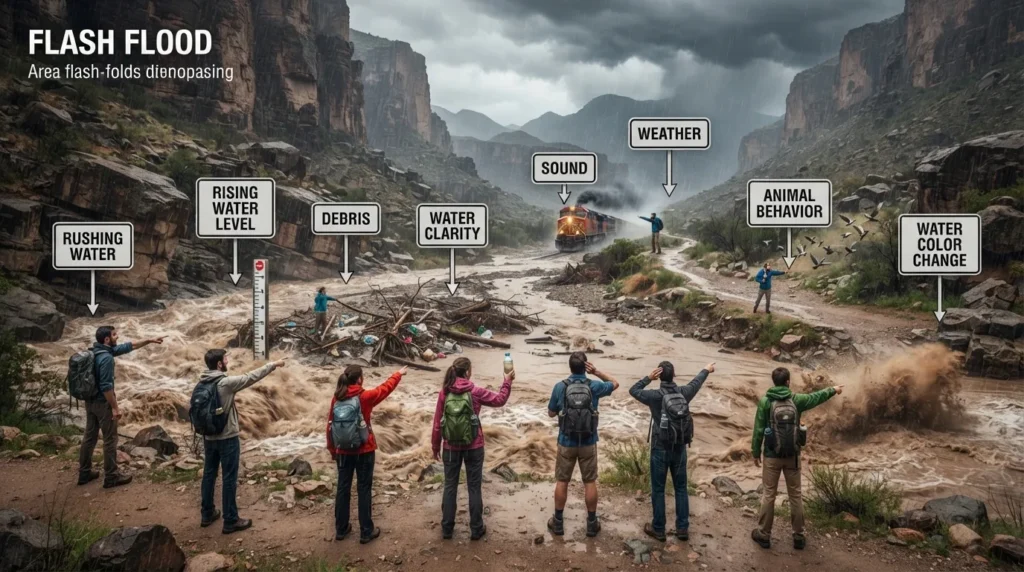
Meta description: Learn 8 warning signs of a flash flood, from roaring water and muddy streams to rising water, debris, storms, and sudden changes in flow, so you can reach higher ground quickly.
Flash floods can become dangerous with very little warning. You may be standing in a canyon, near a stream, on a road, or in another low-lying area while the weather around you still looks manageable. The real danger may be coming from upstream, where heavy rainfall can send a fast-moving surge toward you.
Knowing the warning signs can give you valuable time to react. The key is not to wait until floodwater reaches you. If several warning signs appear together, move away from the water and toward higher ground immediately.
1. You Hear a Sudden Roaring Sound
One of the most important warning signs is an unusual roar coming from upstream.
A flash-flood surge can produce a deep sound that may resemble a freight train. The noise can become louder very quickly, sometimes leaving only seconds to react and minutes at most.
If you hear a rapidly approaching roar but cannot see its source, do not investigate. Treat the sound as a serious warning and move toward higher ground.
2. The Water Turns Muddy or Starts Rising Fast
Clear water can change quickly when floodwater begins moving downstream.
Watch for:
- Brown or muddy water
- A sudden increase in water depth
- Floating leaves, branches, or other debris
- Stronger or more turbulent currents
- Water changing from shallow to much deeper within minutes
A stream that was ankle-deep can potentially become waist-deep in minutes during a rapidly developing flood.
Never assume shallow-looking water is safe simply because it was safe earlier.
3. Water Flow Suddenly Changes
A sudden change in the way water is moving deserves attention.
For example, a stream may unexpectedly slow down or become unusually still. An upstream blockage, such as accumulated debris, can temporarily restrict the flow. If that blockage breaks, a powerful surge may travel downstream.
The opposite situation is also dangerous: rapidly increasing flow, stronger currents, or turbulent water can indicate that more water is arriving from upstream.
Do not wait to find out what caused the change. Leave the area if the water behavior becomes unusual.
4. Debris or Small Rocks Begin Moving
Moving objects in a stream can provide an early indication that the current is becoming stronger.
Look for:
- Sticks and leaves
- Foam
- Branches and logs
- Other plant material
- Small rocks
- Gravel being pushed along the streambed
Small rocks and gravel that begin tumbling can signal increasing current strength. Larger debris may follow as the flood becomes more powerful.
If debris is already moving quickly, the safest response is to leave the waterway rather than watch for larger objects.
5. Dark Clouds or Thunderstorms Develop Upstream
The weather directly above you does not always show the full picture.
You may have clear skies overhead while dark clouds, thunder, or heavy rainfall are occurring at higher elevations or farther upstream. Water from those areas can travel into a canyon, creek, stream, or river and reach you later.
Rainfall can be especially important when it occurs around 10–20 miles upstream or away from your location.
Pay attention to:
- Dark clouds over higher elevations
- Distant thunder
- Growing thunderheads
- Lightning
- Heavy rainfall upstream
- A storm system remaining over one area
If the weather is worsening upstream, do not wait for rain to reach you before considering the danger.
6. Water Starts Pooling in Low Areas
Flash-flood danger is not limited to wilderness streams.
Water pooling on roads, drainage areas, underpasses, and other low-lying locations can indicate that the surrounding drainage system is struggling to handle incoming water.
The situation can change rapidly. Floodwater may become deeper and faster within seconds, particularly where terrain funnels water into a narrow or depressed area.
Avoid walking or driving through rapidly accumulating water. Move away from low ground and toward a safer, higher location.
7. Mudslides, Saturated Soil, or Ground Changes Appear
Heavy rainfall can saturate soil and make slopes unstable.
Mudslides or debris flows in hilly areas are serious warning signs. Saturated ground can also create problems around roads, construction areas, foundations, and sidewalks.
Pay attention to:
- Mud moving down slopes
- Soil becoming heavily waterlogged
- Debris flowing with water
- New or worsening ground cracks
- Cracks around foundations or sidewalks
These signs can indicate that water is affecting the surrounding ground, not just the visible stream or roadway.
If the ground or slope around you becomes unstable, move away from the area rather than trying to inspect the damage.
8. Wildlife Moves Away or Official Warnings Appear
Animals can sometimes react to changing conditions before people notice them.
Deer, birds, and other wildlife moving away from a canyon floor or toward higher ground may be a reason to pay closer attention to your surroundings. Wildlife behavior should not be used as your only warning, but it can add to other signs.
Official information is much more important. Check available weather forecasts, radar, flood advisories, and flood watches when conditions allow.
Local alerts can give you additional time to:
- Leave a dangerous area
- Move vehicles
- Secure outdoor belongings
- Relocate temporarily
- Follow instructions from local authorities
If an official flood warning conflicts with what your eyes are telling you, take the warning seriously.
What to Do When You Notice These Signs
The most important response is simple: move away from the water and reach higher ground.
Use this sequence:
- Stop investigating the flood.
- Leave the canyon, streambed, drainage area, road dip, or other low ground.
- Move uphill or toward higher ground.
- Stay away from rapidly moving water.
- Follow local flood alerts and instructions.
- Do not return simply because the water appears to slow down.
A flash flood can continue changing after the first surge. A temporary decrease in water flow does not necessarily mean the danger has passed.
Flash Flood Warning Signs at a Glance
| Warning sign | What it may indicate | Safer response |
|---|---|---|
| Sudden roaring sound | Approaching floodwater | Move to higher ground immediately |
| Muddy or rapidly rising water | Increasing upstream flow | Leave the waterway |
| Sudden change in flow | Possible blockage or surge | Move away from the stream |
| Floating debris or moving rocks | Stronger current | Get out of the area |
| Dark clouds or thunder upstream | Rainfall feeding the waterway | Monitor conditions and leave early |
| Pooling water in low areas | Overwhelmed drainage | Avoid low ground |
| Mudslides or saturated soil | Unstable, waterlogged ground | Move away from slopes and unstable areas |
| Wildlife movement or official alerts | Changing conditions or confirmed risk | Follow warnings and relocate |
Why Upstream Weather Matters
One of the easiest mistakes is looking only at the weather directly above you.
Flash-flood water can originate somewhere else. Rain falling upstream can collect in streams and drainage channels before reaching your location. This means a person can experience a flash flood even when there is little or no rain overhead.
That is why weather radar, flood watches, flood advisories, and conditions at higher elevations can matter just as much as the sky above your head.
The Most Dangerous Mistake Is Waiting
Flash floods are dangerous because conditions can change faster than people expect.
You do not need to identify every warning sign before acting. A single strong warning, such as a sudden roar or rapidly rising water, may be enough reason to leave.
If you notice several signs at the same time, treat the situation as an immediate emergency. Do not wait for the water to become visibly large, and do not stay behind to take photos or investigate.
Final Takeaway
The 8 warning signs are sudden roaring water, muddy or rapidly rising water, unusual changes in flow, moving debris or rocks, upstream storms, pooling water in low areas, saturated or unstable ground, and wildlife movement or official warnings.
The most important lesson is to act early. Flash-flood conditions can develop within minutes, and water may become dangerous within seconds in narrow or low-lying areas. If you are near a canyon, stream, creek, river, road, or other drainage area and conditions suddenly change, leave the area and move toward higher ground.