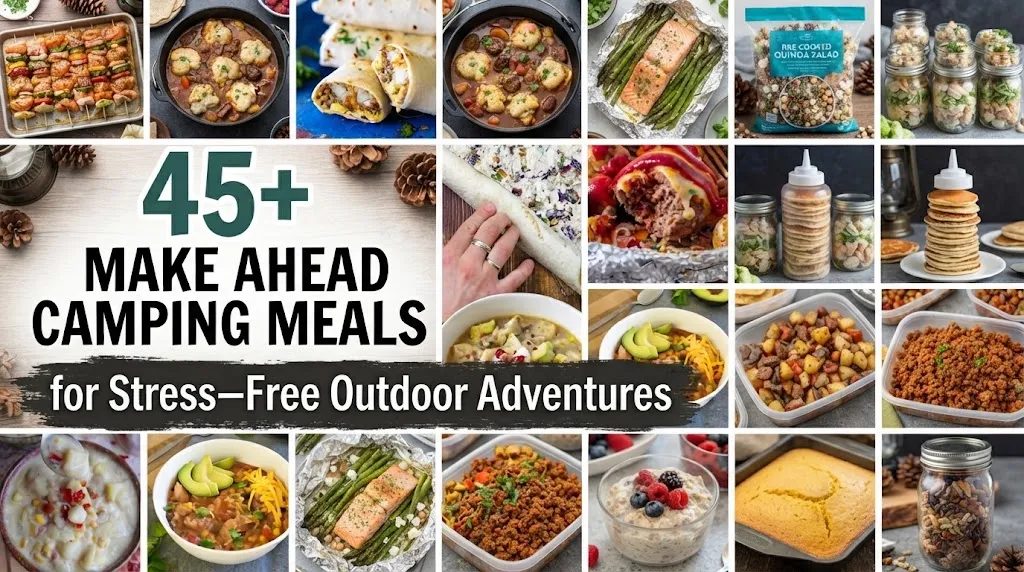
45+ Easy Make Ahead Camping Meals for Stress-Free Outdoor Adventures
Camping is supposed to be about fresh air, outdoor fun, and time with family or friends—not spending half the trip chopping vegetables and washing dishes. The easiest solution is to prepare as much food as possible before leaving home.
These make-ahead camping meals are designed around that idea. You can cook complete meals at home, portion ingredients in advance, or assemble foil packets and sandwiches so that campsite cooking becomes little more than reheating, grilling, or opening a container.
Whether you are tent camping, car camping, RV camping, or feeding a family, the ideas below give you plenty of practical options without turning your campsite into a full kitchen.
Why Make-Ahead Camping Meals Make Camping Easier
The biggest benefit of preparing food before your trip is less work at camp.
Instead of bringing every ingredient separately, you can cook proteins, prepare sauces, chop vegetables, portion snacks, and assemble complete meals at home. At the campsite, you simply heat or finish them.
This approach can help you:
- Spend less time cooking.
- Reduce the number of dishes and utensils needed.
- Make meal portions easier to control.
- Keep children fed without waiting for a complicated meal.
- Prepare food for large groups more efficiently.
- Avoid carrying unnecessary ingredients.
- Create a simple meal schedule before leaving home.
For longer trips, it is useful to think beyond individual recipes. Plan breakfast, lunch, dinner, and 1–2 snacks per day, then decide which foods should be completely cooked at home and which should only be prepared in advance.
45+ Make-Ahead Camping Meals to Try
Make-Ahead Breakfasts
Breakfast is one of the best meals to prepare before a camping trip because mornings at camp can be busy. You may be packing gear, starting a fire, or getting ready for a hike.
1. Breakfast Burritos
Fill tortillas with scrambled eggs, sausage, cheese, and vegetables. Wrap them individually and chill or freeze them before the trip. At camp, reheat them on a skillet or wrapped in foil.
2. Sausage, Egg & Cheese Bake
Bake the entire casserole at home, cut it into portions, and pack each serving separately. It makes a filling breakfast when you need something more substantial than a snack.
3. French Toast Casserole
Prepare the casserole ahead of time and portion it into containers. Bring fruit or syrup separately so everyone can customize their serving.
4. Breakfast Taquitos
Fill tortillas with eggs, cheese, and sausage, then roll and bake them before leaving. They are particularly convenient for families because they can be eaten without much equipment.
5. Baked Oatmeal Cups
Prepare several varieties before the trip so breakfast does not become repetitive. Individual portions also make packing and serving easier.
6. English Muffin Breakfast Sandwiches
Prepare sandwiches with eggs, cheese, and sausage or another preferred filling. Wrap them individually for quick breakfasts.
7. French Toast Loaf
Bake the loaf at home, slice it, and pack portions in an airtight container. Warm it at camp and serve with fruit or syrup.
8. Overnight Oats
Combine oats, milk or yogurt, fruit, and toppings in individual containers. Keep them cold and eat them straight from the container.
9. Pancake Batter
Mix pancake batter at home and transfer it to a leakproof container or squeeze bottle. At camp, heat your skillet and cook pancakes without measuring ingredients.
10. Yogurt & Granola Parfaits
Layer yogurt and fruit in containers, keeping crunchy granola separate until serving.
11. Maple Sausage Breakfast Sandwiches
Cook the sausage and prepare the sandwiches before leaving. They are easy to warm and especially useful when everyone wants breakfast quickly.
Make-Ahead Camping Lunches
Lunch does not always need to be a hot meal. Cold and portable foods can be particularly useful when you are spending the day hiking or exploring.
12. Chicken Salad
Prepare chicken salad at home and pack it in a chilled container. Serve it with bread, crackers, wraps, or lettuce.
13. Pinwheel Sandwiches
Spread your filling over tortillas, roll them tightly, chill, and slice. They are easy to portion for children and groups.
14. Pasta Salad
Prepare pasta salad before leaving and refrigerate it thoroughly. Add vegetables, cheese, chicken, or another protein for a more filling meal.
15. Mediterranean Salad
Combine vegetables, beans, herbs, and other ingredients in advance. Keep dressing separate until serving if you want the vegetables to stay crisp.
16. Wraps
Make chicken, tuna, vegetable, or deli-style wraps ahead of time. If using ingredients that can make tortillas soggy, pack those separately.
17. Cold Fried Chicken
Cook the chicken before the trip and chill it properly. It can make an easy lunch for car camping or a picnic-style meal.
18. Tuna Sandwiches or Wraps
Tuna filling can be prepared ahead and stored cold. Assemble sandwiches shortly before eating for better texture.
19. Homemade Lunchables
Create individual containers with crackers, cheese, sliced meat, fruit, vegetables, and another small snack. This is particularly useful for children.
20. Quinoa Salad
Prepare quinoa, vegetables, herbs, and dressing at home. It works well as a make-ahead lunch or side dish.
21. Protein Snack Packs
Combine boiled eggs, cheese, fruit, vegetables, nuts, or another protein source into individual portions.
Make-Ahead Camping Dinners
Dinner is where make-ahead preparation can save the most campsite effort. Many hearty dishes can be completely cooked at home and reheated.
22. Chili
Chili is one of the easiest camping dinners to prepare in advance. Make a large batch, cool it safely, portion it, and reheat it at camp.
23. Beef Stew
Cook the stew completely at home and store it in leakproof containers. Reheat it in a Dutch oven or suitable pot.
24. Chicken Alfredo
Prepare the chicken and sauce at home and store them separately from the pasta if possible. Combine and reheat at camp.
25. Sloppy Joes
Prepare the meat mixture in advance. At camp, warm it and serve on buns with simple toppings.
26. Taco Meat & Fixings
Cook the taco meat before leaving. Pack tortillas, cheese, salsa, lettuce, and other toppings separately.
27. Lasagna
Bake a compact lasagna at home and portion it before your trip. It is particularly useful when feeding a larger group.
28. Beef Stroganoff
Prepare the beef and sauce ahead of time. Reheat gently and serve with noodles or another preferred base.
29. Chicken & Rice Casserole
Cook the casserole at home and portion it into containers. Reheating is simple and requires fewer ingredients at camp.
30. Mac & Cheese
Make your favorite version before leaving. Pack it in individual portions or one larger container for the group.
31. Pulled Pork
Slow-cook the pork before the trip, shred it, and pack it in meal-size portions. Serve it on buns, tortillas, or alongside vegetables.
32. BBQ Chicken Thighs
Cook the chicken before leaving and pack it chilled. Reheat it over a grill or skillet and add extra BBQ sauce when serving.
33. White Chicken Chili
Prepare the complete chili at home and simply reheat it at camp. It is a useful option for cooler-weather camping.
34. Teriyaki Chicken & Rice
Cook the chicken and rice ahead of time and portion them together. Bring extra sauce separately for serving.
35. Chicken Enchiladas
Assemble and bake the enchiladas before your trip. Reheat individual servings at camp for a filling dinner.
36. Dutch Oven Red Beans & Rice
Prepare the components in advance and use your Dutch oven at camp for reheating or finishing the meal.
Foil-Packet Camping Meals
Foil packets are particularly useful because they can turn pre-portioned ingredients into a low-mess campsite meal.
37. Hobo Packets
Combine seasoned meat and vegetables in individual foil packets. Prepare them at home and keep them chilled until cooking time.
38. Garlic Butter Shrimp & Vegetables
Portion shrimp, vegetables, garlic butter, and seasonings into foil packets. Cook them over an appropriate heat source until the shrimp is safely cooked.
39. Lemon Herb Chicken & Potatoes
Prepare the chicken and potatoes at home, portion them into packets, and refrigerate until your trip.
40. Sausage & Peppers Foil Packets
Combine sliced sausage, peppers, onions, and seasoning. At camp, cook the sealed packets until everything is hot and properly cooked.
41. Mediterranean Chicken Foil Packets
Prepare chicken, vegetables, herbs, and seasonings ahead of time. The packet format keeps preparation simple and cleanup minimal.
42. Chicken Ranch Potato Foil Packets
Combine chicken and potatoes with the seasoning ingredients before leaving. Keep everything cold until cooking.
43. Steak Fajita Foil Packets
Pre-slice steak and vegetables at home and portion them into individual packets. This eliminates much of the cutting and measuring at camp.
No-Cook Camping Meals
Not every camping meal needs a stove or campfire.
No-cook options are especially useful for arrival day, hiking days, hot weather, or days when you simply want to keep things easy.
44. PB&J Sandwiches
Simple, portable, and familiar. Use sturdy bread and prepare only as many sandwiches as you can safely keep cold when necessary.
45. Chicken Salad Wraps
Prepare the chicken salad at home and assemble wraps when you are ready to eat.
46. Yogurt & Granola
Pack yogurt in a cooler and keep granola separate until serving.
47. Trail Mix
Prepare individual trail-mix portions using nuts, dried fruit, cereal, seeds, or other ingredients your group enjoys.
48. Tuna Wraps
Prepare the tuna mixture before leaving and assemble wraps when needed.
49. Cheese & Cracker Packs
Portion cheese, crackers, fruit, and other snack foods into individual containers for a quick lunch.
Quick Camping Meals for Busy Days
Some camping days leave very little time for cooking. You may return from a hike hungry, have children waiting for dinner, or simply want to relax around the fire.
That is where 15–20 minute meals can be useful.
One-pot pasta is a particularly practical format. A simple version can use 1 pound of pasta, 2 cups of marinara sauce, 1 cup of grated Parmesan, and 1 tablespoon of olive oil, with cooking taking approximately 15–20 minutes.
Other quick choices include:
- Instant ramen with pre-cooked chicken
- Quesadillas
- Mini pizzas
- Mac & cheese cups
- Pre-cooked BBQ chicken
- Teriyaki chicken and rice
- Taco meat with prepared toppings
- Pulled pork sandwiches
The trick is to make the campsite cooking stage as short as possible. Do the chopping, measuring, mixing, and cooking at home whenever practical.
Make-Ahead Camping Meals for Kids
Camping with children can make meal timing unpredictable. Keep several foods available that are familiar, portable, and easy to serve.
Good choices include:
- Mini pancakes
- Breakfast burritos
- Homemade Lunchables
- Quesadillas
- Mini pizzas
- Mac & cheese cups
- PB&J sandwiches
- Pinwheel sandwiches
- Chicken salad wraps
- Fruit and yogurt parfaits
- Cheese and crackers
- Trail mix
Individual portions are particularly useful because children can choose what they want without creating another large meal.
Make-Ahead Camping Meals for a Crowd
When cooking for a group, batch preparation becomes more important than recipe complexity.
Choose foods that can be prepared in a large quantity and divided easily, such as:
- Chili
- Beef stew
- Pulled pork
- Sloppy Joes
- Taco meat
- Lasagna
- Mac & cheese
- Pasta salad
- Chicken casserole
- Breakfast casserole
- Foil-packet dinners
Prepare large dishes at home, cool them properly, and divide them into practical serving sizes. This makes both transportation and reheating easier.
Healthy Make-Ahead Camping Food
Make-ahead camping food does not have to mean heavy comfort food at every meal.
For a balanced trip, include a mixture of protein, carbohydrates, fruits, vegetables, and snacks.
Useful choices include:
- Quinoa salad
- Mediterranean salad
- Grilled chicken and roasted vegetables
- Lentil soup
- Zucchini noodles with pesto
- Yogurt and fruit
- Overnight oats
- Hard-boiled eggs
- Homemade energy balls
- Fresh fruit
- Nuts and trail mix
One planning approach recommends 3 main meals per day plus 1–2 snacks, with roughly 400–600 calories per main meal as a general planning range. Actual needs vary considerably with age, activity, trip length, weather, and individual dietary requirements, so treat that figure as a planning reference rather than a strict target.
How to Prepare Camping Meals Before You Leave
The best make-ahead camping strategy is to divide preparation into simple stages.
1. Choose Your Meals First
Before shopping, create a meal plan for every day of the trip.
For example, a three-day trip could include:
Day 1: Breakfast burritos, chicken wraps, chili
Day 2: Overnight oats, pasta salad, foil-packet chicken
Day 3: French toast casserole, snack packs, pulled pork
This prevents overpacking and makes it easier to calculate portions.
2. Cook What Can Be Cooked at Home
Cook proteins, casseroles, sauces, taco meat, pulled pork, chili, and other suitable meals before departure.
For foods that need final cooking at camp, prepare the ingredients instead. Chop vegetables, portion seasonings, slice meat, and assemble packets.
3. Cool Cooked Food Quickly
Do not put a large, steaming pot directly into your cooler. Divide cooked food into shallow containers so it can cool more quickly before refrigeration.
USDA guidance recommends keeping cold perishable foods at 40°F or below and avoiding the food-safety “Danger Zone” between 40°F and 140°F.
4. Label Every Container
Write the meal name and day on each container.
For example:
Day 1 Dinner — Chili
Day 2 Lunch — Chicken Wraps
Day 3 Dinner — Pulled Pork
This small step can save considerable time when everyone is hungry.
5. Freeze Meals When Appropriate
Meals intended for later in the trip can sometimes be frozen beforehand. Frozen food can also act as an additional cold source inside your cooler.
USDA specifically recommends refrigerating or freezing prepared foods before departure when appropriate and using frozen gel packs or frozen drinks as cold sources.
How to Pack Your Camping Cooler
A well-organized cooler can make your entire food plan easier.
Place the foods you expect to use first where they are easiest to reach. Keep raw meat properly separated from ready-to-eat foods, preferably in a separate cooler when practical.
REI recommends pre-chilling the cooler, using ice blocks or frozen containers, double-bagging raw meat, and keeping perishable foods at 40°F or colder.
For longer trips, consider organizing food by day instead of simply throwing everything into one cooler. You can use separate bags or containers for Day 1, Day 2, and Day 3.
For more detailed food-handling guidance, see the USDA Food Safety While Hiking & Camping guide.
Camping Food Safety Rules You Should Not Skip
Convenience should never come at the expense of food safety.
Keep these basic rules in mind:
- Keep cold perishable food at 40°F or below.
- Do not leave perishable food in the temperature danger zone for more than 2 hours, or 1 hour when the temperature is above 90°F.
- Reheat leftovers to 165°F.
- Cook poultry to 165°F.
- Cook ground beef, pork, lamb, or veal to 160°F.
- Cook whole cuts of beef, pork, lamb, or veal to 145°F, followed by a 3-minute rest.
- Use a clean food thermometer when cooking meat.
- Keep raw meat separate from ready-to-eat foods.
- Wash or sanitize hands before preparing food.
- If your cooler no longer has ice and perishable food has become unsafe, discard it rather than taking a chance.
For additional official guidance, the USDA food-safety temperature guide is useful to keep bookmarked.
Don’t Forget Wildlife-Safe Food Storage
Food storage is not only about keeping meals fresh. It is also about protecting wildlife and keeping your campsite safe.
Never leave food, trash, or strongly scented products inside your tent. Camping areas may have different rules for coolers, cars, bear boxes, bear canisters, and food-storage lockers.
The National Park Service recommends checking the specific park’s food-storage requirements before your trip.
You can also read REI’s camping food-storage guide for practical guidance on coolers, food containers, campsite storage, and backcountry food protection.
The Best Make-Ahead Camping Meal Strategy
You do not need to prepare every single meal completely before leaving.
A better approach is to use three preparation levels:
Level 1 — Completely Prepared:
Chili, pulled pork, lasagna, pasta salad, chicken salad, breakfast casseroles, and similar foods can often be prepared before departure.
Level 2 — Mostly Prepared:
Taco meat, chicken and rice, quesadillas, foil packets, and similar meals can have their ingredients prepared and portioned at home, with final cooking at camp.
Level 3 — Assemble Only:
PB&J sandwiches, wraps, snack packs, yogurt parfaits, and Lunchables-style meals require little or no campsite cooking.
This system gives you flexibility without forcing every meal into the same preparation method.
A Simple 3-Day Camping Meal Plan
If you want a ready-to-use starting point, try this combination:
Day 1
Breakfast: Breakfast burritos
Lunch: Chicken salad wraps
Dinner: Homemade chili
Snack: Trail mix and fruit
Day 2
Breakfast: Overnight oats and fruit
Lunch: Pasta salad
Dinner: Lemon herb chicken and potato foil packets
Snack: Yogurt and granola
Day 3
Breakfast: French toast casserole
Lunch: Homemade Lunchables
Dinner: Pulled pork sandwiches
Snack: Energy balls
The plan intentionally mixes hot meals, cold meals, portable foods, and low-effort options, so you are not cooking complicated dishes at every meal.
What to Pack With Your Make-Ahead Meals
Food is only part of successful campsite meal preparation. Your equipment should match the meals you selected.
Consider packing:
- Cooler with sufficient cold sources
- Airtight food containers
- Leakproof bags
- Foil
- Cutting board
- Knife
- Tongs
- Spatula
- Cooking pot or Dutch oven
- Skillet
- Plates and bowls
- Reusable utensils
- Food thermometer
- Hand sanitizer
- Dishwashing supplies
- Trash bags
- Water for cooking and cleaning
For more campsite organization ideas, the National Park Service camping packing guidance explains why meal planning, lightweight foods, food containers, coolers, and appropriate storage matter.
Final Thoughts
The best camping meal is not necessarily the most complicated recipe. It is the one that fits your trip, stores safely, travels well, and does not create unnecessary work.
With 45+ make-ahead options ranging from breakfast burritos and overnight oats to chili, pulled pork, pasta salad, foil packets, sandwiches, and simple snacks, you can build a camping menu around your group’s needs. Prepare the messy parts at home, portion everything clearly, keep perishables properly chilled, and leave yourself only the easiest cooking tasks at camp.
That way, your campsite becomes a place to eat, relax, explore, and enjoy the outdoors—not spend hours preparing dinner.